
What actually determines a heat pump’s running cost
A heat pump’s running cost is decided by how efficiently it converts electricity into heat, how much heat your building needs, and what you pay for electricity. Airwarm will explain each of those for your property and will not put a figure on your future bills, because nobody honestly can.
Why this article does not contain numbers
Plenty of websites offer a saving figure or a payback period. Treat them carefully: those figures depend on assumptions about your building, your habits, your current fuel, your tariff and future energy prices, and changing any one of them changes the answer substantially.
What can be done honestly is to explain the mechanisms, so you can judge a proposal on whether it addresses them. That is what the rest of this page does.
The five things that decide it
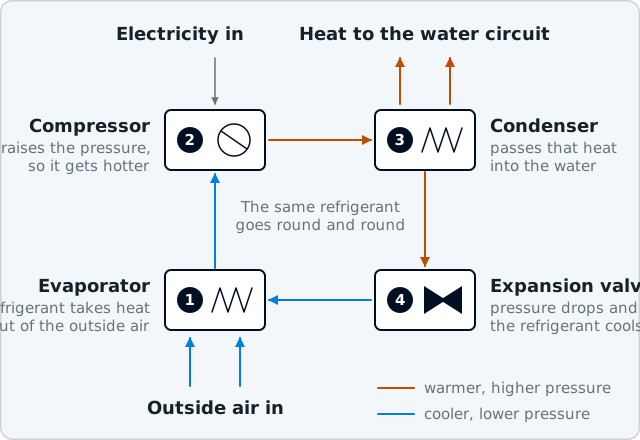
1. Efficiency, expressed as COP and SCOP
COP, the coefficient of performance, is the ratio of heat delivered to electricity used at a given moment. SCOP is the seasonal average.
Well-designed domestic air source systems commonly achieve seasonal figures in the region of three to four units of heat per unit of electricity, but that is a typical range rather than a specification, and a poorly configured system can fall well below it. Your system’s figure is an outcome of the design, not a property of the box.
2. Flow temperature
This is the biggest single lever within a designer’s control. The wider the gap between the outside air and the water temperature the heat pump has to produce, the harder it works and the lower the COP.
A system commissioned to run at a lower flow temperature uses less electricity for the same heat than the same equipment forced to run hotter. That is why the heat loss calculation, the emitter schedule and weather compensation are not separate topics from running cost. They are the running cost conversation.
3. How much heat the building needs
A house that loses heat quickly needs more heat delivered, whatever is producing it. Insulation, draughtproofing and glazing reduce the heat required and also allow a lower flow temperature, so they work on the problem twice. It is why two identical heat pumps in two identical houses can produce different bills.
4. Your electricity tariff
Heat pumps consume electricity, so the unit rate you pay matters directly, as does the standing charge and whether your tariff has cheaper periods.
Because a heat pump heats a cylinder as a store rather than on demand, hot water heating can often be scheduled into a chosen period. Whether that helps depends entirely on your tariff, so review it as part of the project rather than afterwards. Airwarm can explain how the system can be scheduled; the tariff choice is yours, and Airwarm is not an energy supplier or financial adviser.
5. How you use it
Target temperatures matter: a house held a degree warmer costs more to heat, with any technology. Hot water habits matter. And whether the system runs steadily or is switched on and off aggressively matters more with a heat pump than it did with a boiler.
What Airwarm does about it
The room-by-room heat loss calculation establishes how much heat the building needs. The emitter schedule establishes the lowest flow temperature the house can realistically be heated at. The compensation curve is then set so the system produces only the temperature the weather requires, and this is recorded at commissioning rather than left on a default.
Where fabric improvements would materially change the design, Airwarm will say so, including where that means recommending work before a heat pump rather than alongside it.
The proposal states the design assumptions plainly: design flow temperature, emitter changes required, hot water strategy and the equipment’s published performance data. What it will not contain is a promised bill.
Aftercare then checks the assumptions against reality, through the 48-hour contact, the two-week comfort review, seasonal optimisation where required and the annual service.
Common questions
“Heat pumps are always cheaper to run than a gas boiler.” Not automatically. It depends on the efficiency achieved and on the ratio between electricity and gas prices at the time, and the comparison differs again for households currently on oil, LPG or direct electric heating.
“Heat pumps are always more expensive to run.” Also not true, and usually based on a badly performing example. The variation between installations is wide, which is precisely why the design matters.
“The manufacturer’s SCOP figure tells me what I will get.” Published figures are measured under standard test conditions at stated flow temperatures. They are useful for comparing equipment. They are not a prediction of your house.
“Insulating first is a delaying tactic by installers.” Sometimes fabric work genuinely should come first, and saying so costs Airwarm a sale in the short term. That is the point of assessing suitability rather than selling a package.
Next step
Start with the Home Energy Assessment. A quick first step to understand whether a heat pump is worth exploring for your property.
Two things are worth gathering first, because they make every later conversation concrete: your recent energy bills or annual consumption figures, and any records of insulation, glazing or extension work. Actual consumption is far more informative than an estimate.
When you compare proposals, ask each installer what design flow temperature they have used and how they calculated the heat loss. If they cannot answer, you cannot assess their running cost claims either.
Frequently asked questions
Will Airwarm tell me what my bills will be?
No. Airwarm will explain the design assumptions, the design flow temperature and the equipment’s published performance data, and discuss how your tariff and usage interact with that. Predicting your bill would be guesswork presented as fact.
Does a heat pump cost more to run in a cold snap?
Yes. Efficiency falls somewhat as outside temperatures drop, and the building needs more heat at the same time, so consumption rises in the coldest weather. That is normal and expected.
Should I change my electricity tariff?
It is worth reviewing, particularly if your system can schedule hot water heating. Airwarm can explain what the system is capable of; the choice of supplier and tariff is yours.
Can I monitor how well it is performing?
Many systems offer monitoring through the manufacturer’s app or an added energy meter. Monitoring is worth having if you want to understand your own system rather than take a figure on trust.
Read next
Weather compensation
How a system is set up to produce only the temperature the weather actually requires.
Solar and battery
Where generation and storage genuinely help, and the seasonal mismatch to plan around.
What a survey covers
The measurements that turn a general answer into one about your house.
Start with your home, not a product
The Home Energy Assessment takes a few minutes, asks for no photographs at this stage and gives you an honest first view of whether an air source heat pump is worth exploring for your property.